It’s that time again! Summer breaks are ending and kids are heading back to school and college.
This would be a good time to think about renewing commitments to clean air practices as routines get busier.
With kids going back to school, traffic will be busier – there will be more cars and busses on the road. Thus, it’s important to remember to keep cars maintained and be mindful of reducing idling. Try to time school dropoffs and pickups with less time sitting in the dropoff/ pickup line. For kids going to the same campuses, consider carpooling with other families or consider letting kids walk or bike to school together.
Remember to be extra cautious in school zones: watch for those kids who may be walking or biking in school zones as well as those who may be getting on or off a school bus! Don’t forget to sign up for air quality alerts and take extra precautions on those days, especially if outdoor activities are planned.
We aren’t done with the 2026 ozone season yet! Hotter temperatures and sunny days at the end of summer go along with the potential for high ozone days, so watch for days that may reach the unhealthy for sensitive groups air quality index or higher. With the start of the new school year, try to include a recommitment to your efforts for cleaner air!
During ozone season, a great clean air effort for people is for them to be aware of the air quality forecast and ozone action day alerts. Most local weather forecasts include a note when there is an Ozone Action or Air Quality Alert Day. Other options include signing up to receive the air quality forecast and ozone alerts in your email inbox.
The Texas Commission on Environmental Quality (TCEQ) offers an air quality forecast and alert sign-up on their website at https://www.tceq.texas.gov/airquality/monops/ozone_email.html. It provides the Texas Air Quality Forecast based on the Environmental Protection Agency (EPA) Air Quality Index (AQI) for ozone, particulate matter (PM10), and fine particulate matter (PM2.5) for fourteen regions across the state.
More information about the AQI is available at EPA’s Air Now website at https://www.airnow.gov/aqi-and-health/ as well as on our website at https://hccleanair.org/clean-air-education/. TCEQ’s alert system includes Ozone Action Day forecasts for nine metropolitan areas in the state. These forecasts inform the public when conditions are favorable for ozone formation. This alert system provides an opportunity for citizens, businesses, and industry to make clean air efforts to reduce pollutants that contribute to ozone formation. Some of these efforts are listed on the Clean Air Education page of the Hood County Clean Air Coalition (HCCAC) website listed above.
Another resource for air quality alerts is the Air North Texas Coalition at the North Central Texas Council of Governments (NCTCOG). They offer an easy sign-up for alerts on their website at https://www.airnorthtexas.org/. Air North Texas has a mascot, Arlo the “airmadillo”, whose bands change color to match the local AQI. Arlo is on the home page of the Air North Texas website and the HCCAC website and provides a quick way to know what the current AQI is for the region.
Air quality forecasts allow for early notification about when clean air efforts can be most beneficial, but they are also important for parents with young children, those people who work outdoors, those with respiratory issues, and other air quality-sensitive groups to plan for bad air quality days. Consider signing up for air quality forecasts and alerts as a great addition to your clean air efforts this ozone season!
The Air Quality Index includes a level of air pollution for “unhealthy for sensitive groups.” These sensitive groups include children, older adults, people who are active outdoors, and people with lung disorders. The negative effects of ozone air pollution include irritation of the respiratory system, reduced lung function, inflammation and damage to cells that line the lungs, increased lung susceptibility to infection, and aggravated asthma, emphysema, and chronic bronchitis. The negative effects of fine particulate matter are linked to premature death for people with heart or lung disease, non-fatal heart attacks, irregular heartbeats, and respiratory issues including aggravated asthma, decreased lung function, and irritation of airways. Because of these effects, those who fall into one of the sensitive groups are more likely to have negative impacts from exposure to air pollution at lower levels. New research shows that even those that are healthy should be aware of their exposure to air pollution.
The Environmental Protection Agency (EPA) partnered with the National Heart, Lung, and Blood Institute (NHLBI) in 2004 for a 10-year study that ended in 2014 to investigate air pollution as a risk factor for heart disease. The findings from the study called the Multi-Ethnic Study of Atherosclerosis Air Pollution Study (MESA Air) identified a link between air pollution and atherosclerosis which is the buildup of plaque in the coronary artery that can affect heart health.1 The study showed that healthy individuals exposed to particulate pollution over the long term had accelerated atherosclerosis and the higher the exposure the faster the progression.1 As this ozone season progresses, it’s important for all of us to pay attention to air quality forecasts and take steps to protect our health.
In last month’s Clean Air Notes, we talked about the air quality benefit of trees. In this month’s Clean Air Notes, we discuss which trees work best to remove air pollution. Some trees are better able to remove air pollution than others. Of those that can remove air pollution, some are better at absorbing ozone pollution while others are better at capturing particulate matter. Both offer a benefit to air quality!
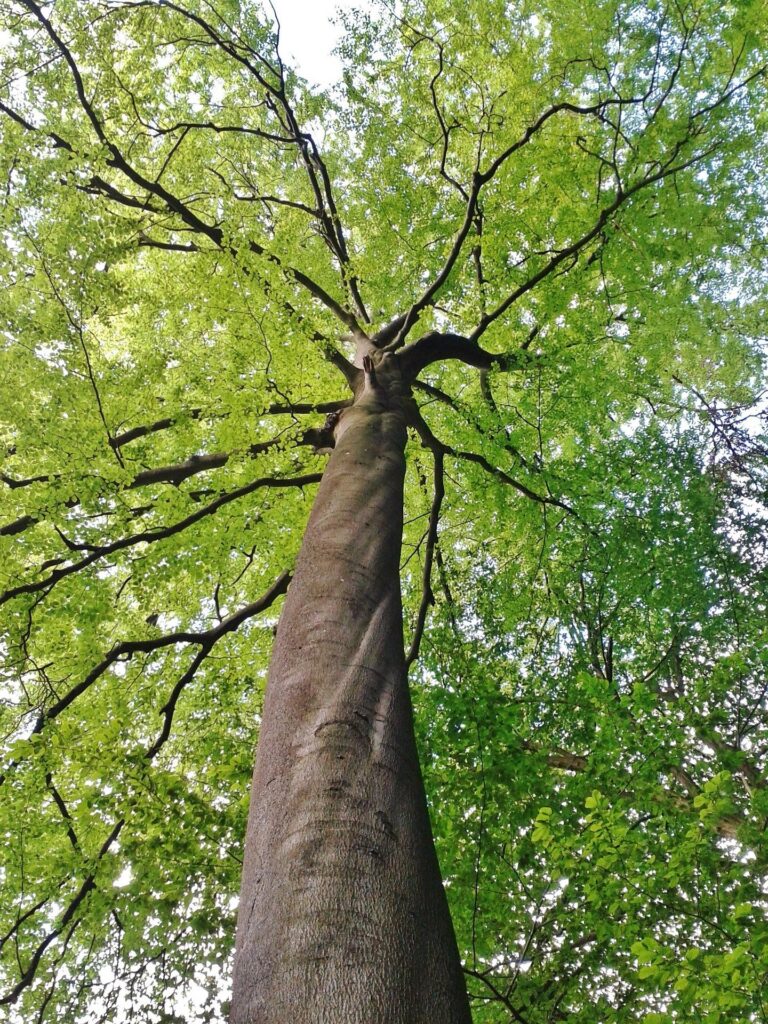
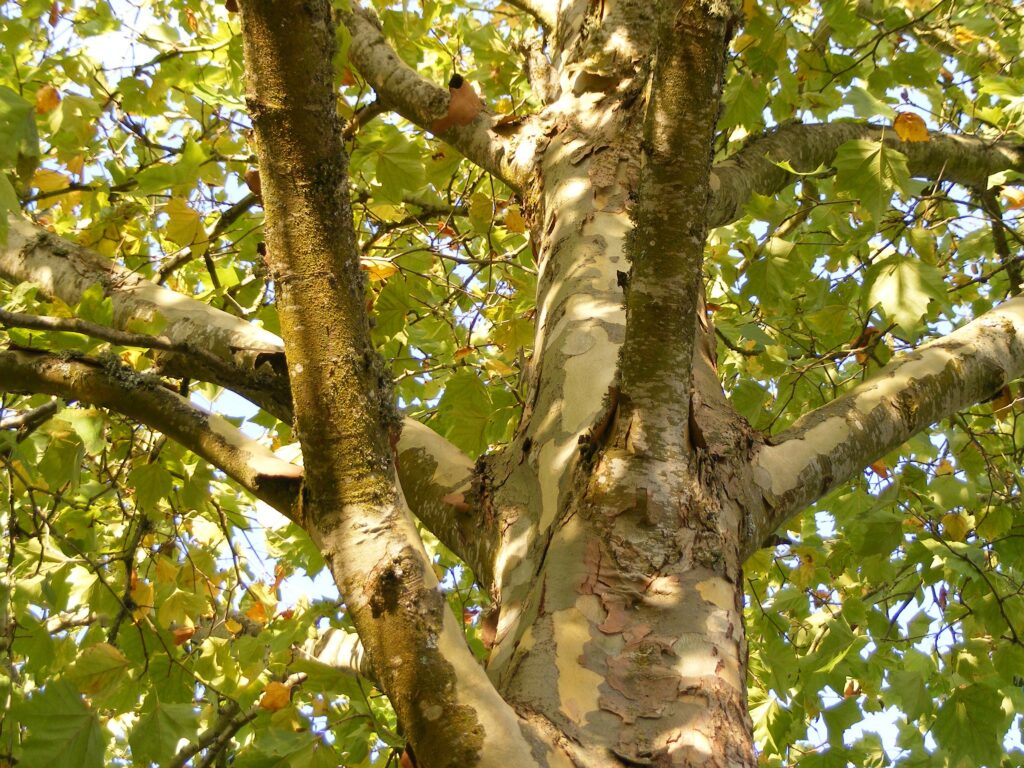
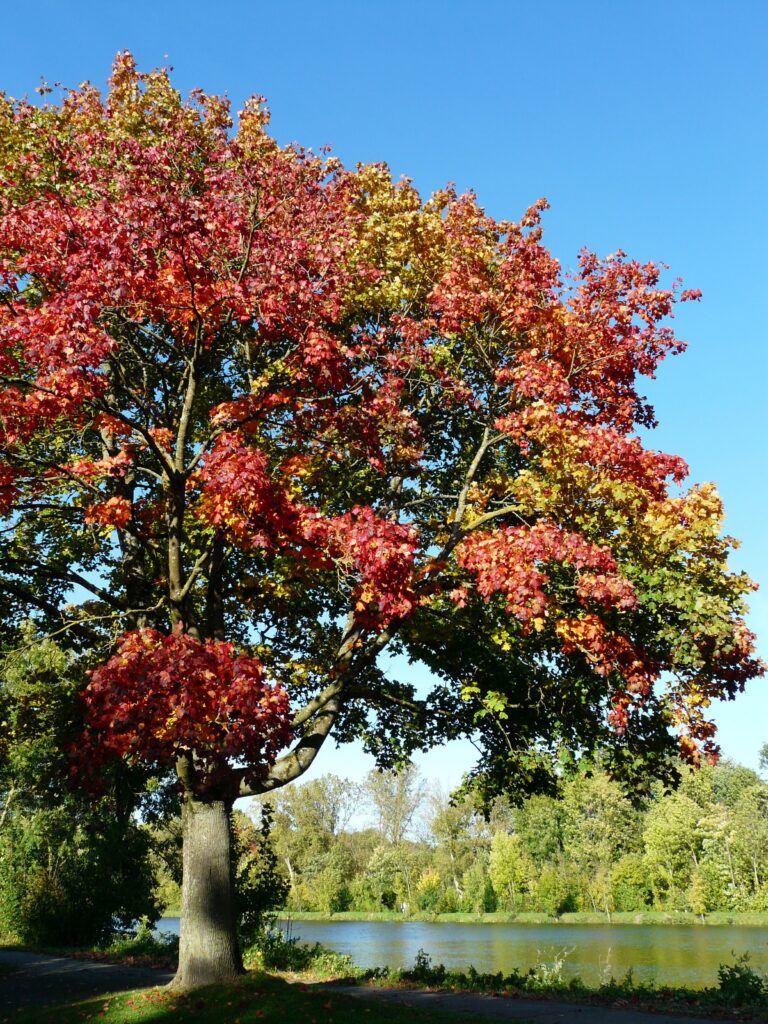
Ozone and other gaseous pollutants are removed by trees through their leaf stomata where trees and plants perform their normal gas exchange that includes taking in carbon dioxide and releasing oxygen.1 After being absorbed into the leaf, the pollutants are converted to less harmful substances or broken down. 2 Some of the best trees to plant for ozone reduction include the common beech, London plane, maple, tulip, and horse chestnut trees. 3
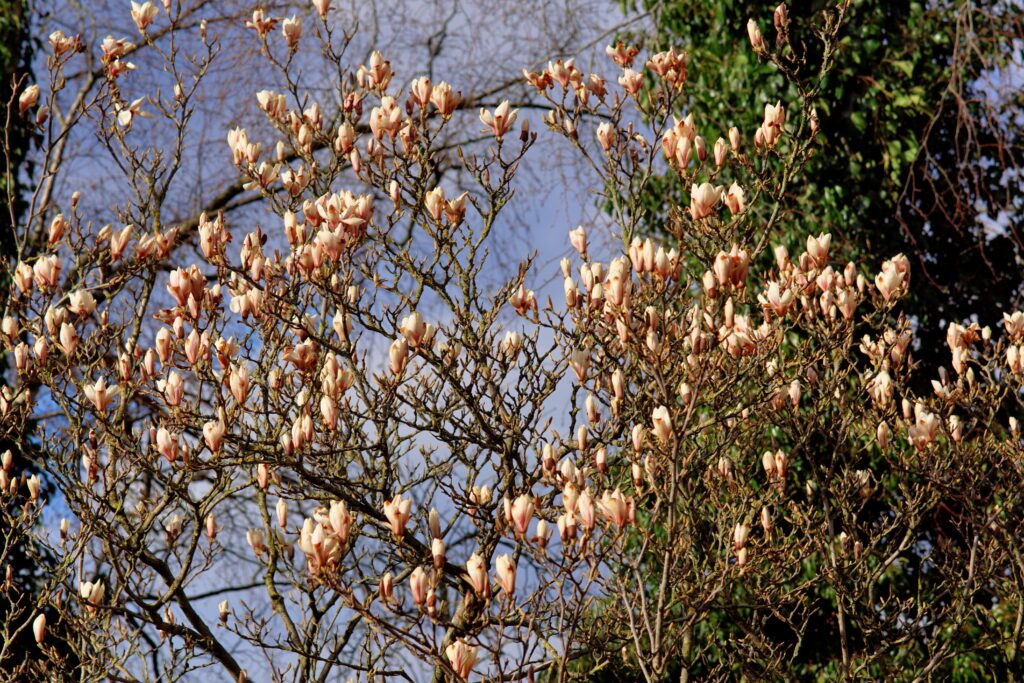
Beech Tree, Image by Cocoparisienne, https://pixabay.com/photos/beech-beech-tree-treetop-tree-370554/London Plane Tree, Image by 4volvos, https://pixabay.com/photos/plane-tree-london-plane-tree-511483/Maple Tree, Image by Hans, https://pixabay.com/photos/maple-tree-tree-fall-autumn-leaves-61826/Tulip Tree, Image by Kapa65, https://pixabay.com/photos/tulip-tree-spring-blossoms-5003786/Horsechestnut Tree, Image by AnnaZh13, https://www.pexels.com/photo/blossoming-chestnut-tree-16767018/
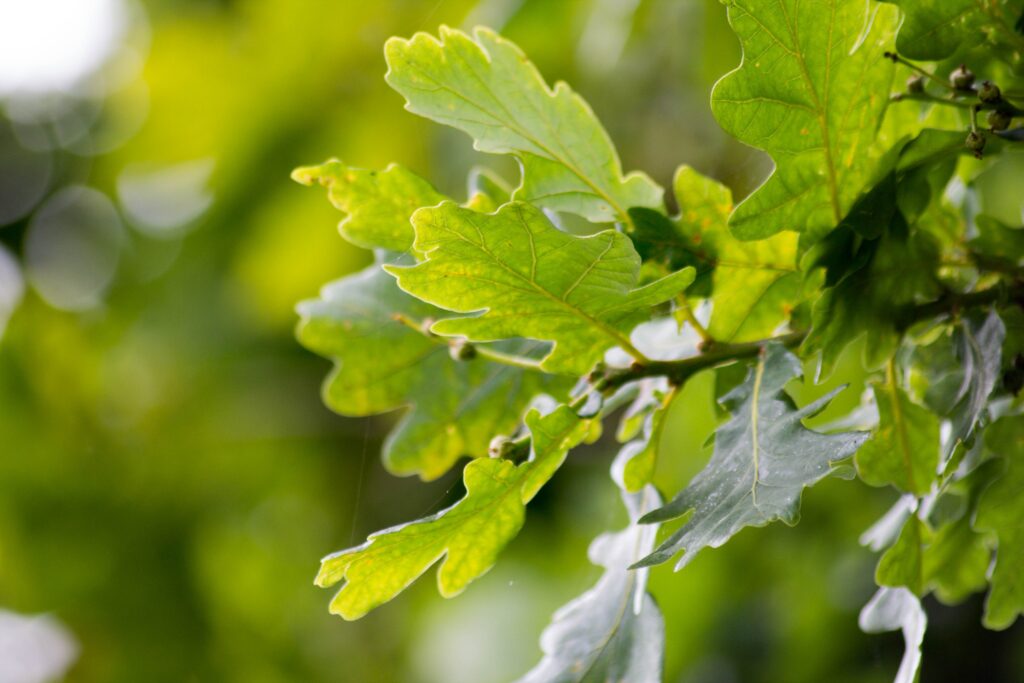
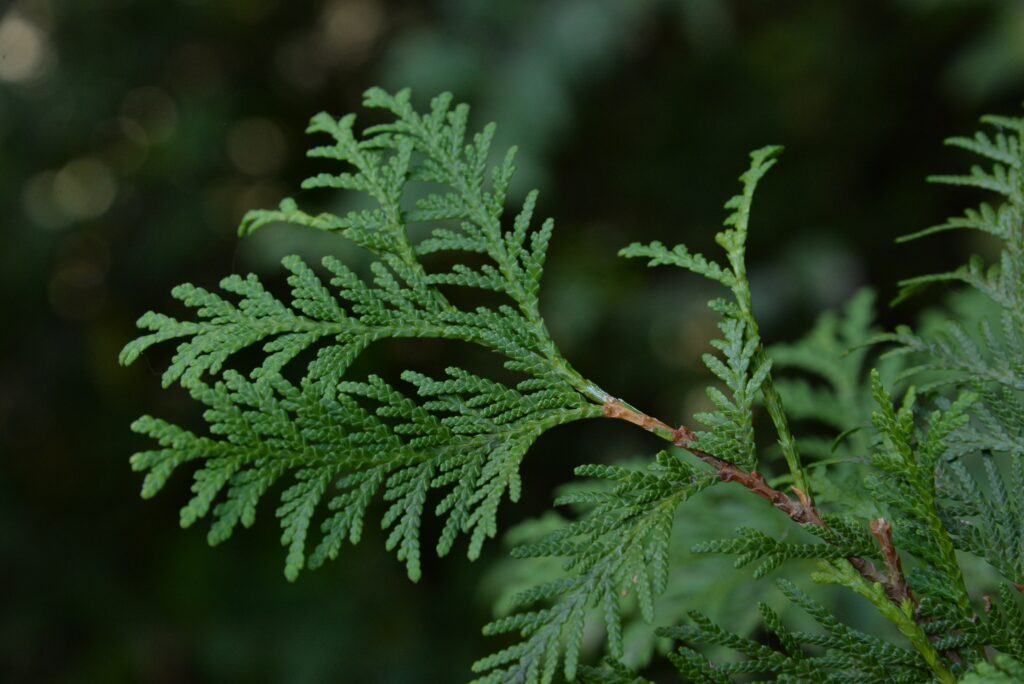
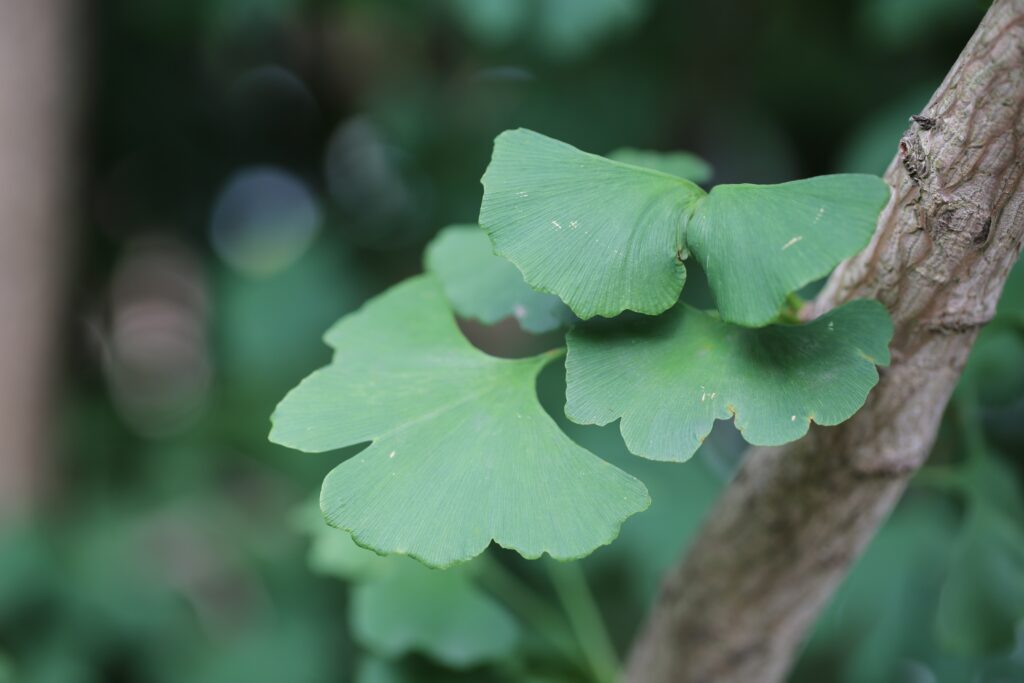
Particulate matter is not absorbed by trees but can be captured on leaves, especially those that are waxy, resinous, hairy, or scaly. It can also be captured by uneven, rough branch surfaces.1 The leaves and branches capture the particulate matter until rain fall removes the pollutants from the tree surfaces and deposits them on the ground. 2 Some of the recommended trees for filtering particulate matter are the English oak with rough leaves, the silver birch with leaves that are covered in tiny hairs, and the ginkgo biloba that has a large surface area for particulate matter capture. 2 Evergreen trees like the eastern white pine and cypress trees are also good for filtering particulate matter and offer the benefit of keeping their dense needles throughout the year allowing for air quality benefits year-round!2
English Oak Tree Leaves, Image by Pexels, https://pixabay.com/photos/english-oak-leaves-tree-1835263/Eastern White Pine Branches, Image by JUN Pedrozo, https://www.pexels.com/photo/sunlit-pine-branches-against-clear-sky-34590581/Cypress Tree Leaves, Image by supergreenus, https://pixabay.com/photos/tree-cypress-side-bag-2680999/ Silver Birch Leaves, Image by cme3d, https://pixabay.com/photos/birch-leaf-nature-tree-leaves-2861811/Gingko Biloba Leaves, Image by joanna770, https://pixabay.com/photos/ginkgo-biloba-leaves-tree-ginkgo-7714597/
Arbor Day, the holiday that encourages tree planting, is April 24th of this year. Trees offer lots of air quality benefits including absorbing carbon dioxide, releasing oxygen, and reducing particulate matter and ozone pollution. They can also address the “heat island” effect in urban areas. The “heat island” effect is observed where greenery is limited and buildings, roads, and other infrastructure absorb and reflect the sun’s energy creating “islands” of warmer temperatures compared to surrounding areas.1
Trees offer the benefit of absorption of carbon dioxide that is linked to climate change. They also provide oxygen – one tree can supply a day’s worth of oxygen for up to four people!2 The cooling effect of shade trees around buildings can help save money by reducing energy use by up to 25%.2 The shade also helps reduce the “heat island” effect in urban areas. Trees and vegetation are also able to cool the surrounding area through evapotranspiration, the process that trees and plants use to absorb water from their roots and evaporate it through their leaves. The air is cooled by using heat from the air to evaporate the water.3
Trees also filter air pollutants like particulate matter and ozone. Trees absorb gaseous pollutants like ozone through the leaf as they also intake carbon dioxide and other gases. Particulate matter can also be removed from the air by trees as certain leaves are able to trap the particulate matter that is either later removed by wind or removed by rain. 4
Some trees are better than others for removing air pollutants. Look for a future blog with information about which trees are best for removing pollutants. With all the air quality benefits offered by trees, consider planting a tree as an air quality effort to recognize Arbor Day! For more information about tree benefits, visit https://www.arborday.org or https://www.epa.gov/heatislands/benefits-trees-and-vegetation.
Image by Hans from Pixabay – https://pixabay.com/photos/dogwood-flowers-blossom-bloom-5389588/
Warmer temperatures signal that ozone season is around the corner. For North Texas, ozone season runs from March 1st through the end of November. While the season is identified with those dates, moderate readings can and, in recent years, often do occur outside of the “ozone season”. Already in 2026, there was a moderate reading at the Hood County monitor in late February.
It’s important to be aware of the ozone season because of the negative health impacts of ozone. Ozone can cause irritation of the respiratory system, reduced lung function, increased lung susceptibility to infection, and can aggravate asthma, emphysema and other lung conditions. The negative health impacts of ozone are why the air quality index notes a level of ozone as “unhealthy for sensitive groups”. Children, older adults and those with lung conditions are impacted more by ozone and help make up the “sensitive group” classification. To increase your awareness you can sign up for ozone alert notifications through TCEQ at https://www.tceq.texas.gov/airquality/monops/ozone_email.html/ or Air North Texas at https://www.airnorthtexas.org.
As the new ozone season starts up, it’s a good time to review some of the clean air efforts that individuals can do to help! To reduce emissions from vehicles, minimize vehicle trips by attending meetings virtually, carpooling, or combining trips. It also helps to keep your vehicle maintained including ensuring tire pressure is correct and refueling later in the day. Energy and water efficiency measures help by reducing emissions from power plants. Efficiency measures that help reduce ozone include energy efficient home improvements like choosing energy and water efficient appliances and switching to LED lighting.
Image by ianmontgomery from Pixabay -https://pixabay.com/photos/pollution-air-pollution-smoke-4001555/
One of the clean air efforts of the Hood County Clean Air Coalition is to monitor new air permits in Hood County or nearby. An air permit is required for an industrial or commercial facility to emit pollutants. In Texas, the authorization for an air permit is done through the Texas Commission on Environmental Quality (TCEQ). There are several types of air permits that TCEQ authorizes depending on the type of facility and the amount of pollutants that are emitted including De Minimis, Permit by Rule Authorizations, Standard Permit, New Source Review Permit, Flexible Permit, Prevention of Significant Deterioration Permit, and Nonattainment Permit. A Title V Federal Operating Permit is also required for major source facilities (TCEQ, 2026).
TCEQ’s website homepage has a map-based search feature for regulated facilities and their permits, https://www.tceq.texas.gov/. More information specifically pertaining to air permits is available on the air permitting webpage, https://www.tceq.texas.gov/permitting/air/air_permits.html. Permits can be searched by looking for the status of air permits and permit applications at https://www.tceq.texas.gov/permitting/air/air_status_permits.html or following the instructions on that page to search the TCEQ Central File Room Online. Guides are available on that page for several different types of permit searches.
The HCCAC will continue to monitor air permits in and near Hood County and take opportunities to provide input, when possible, in the permitting process.
The Hood County Clean Air Coalition started off the new year with board member nominations and officer elections. The Coalition elected a new Board Chairman, former Treasurer, Joe Drew. He has been on the Board since 2015. The Communications Officer position was renamed the Vice-Chair position but will retain the assistance with communications obligation. The new Vice Chair is the former Communications Officer, Chuck Licata. He has been a board member since 2022. Former Board Chairman, Mark Franco, will take over the Treasurer responsibilities. Mark served as Board Chairman since June 2020 and is one of the founding board members, joining when the Coalition was formed in 2012. Cresson Mayor Pro-Tem Lisa Clement will remain the HCCAC Secretary for 2026. She has been on the HCCAC board since 2024. Local government representatives on the HCCAC board include Hood County Judge Ron Massingill, Mayor of Granbury Jim Jarratt, and the HCCAC Secretary, Mayor Pro-Tem of Cresson Lisa Clement.
John Campbell, one of the founding members of the Coalition, decided to step away from the board in 2026. John was one of the guiding members of the Coalition who knew the community of Granbury and Hood County very well. The board welcomed new member, Darlene Du Val, of the City of Granbury Economic Development Department in January. Darlene will offer the Coalition a new perspective in addressing local air quality issues. Remaining board members are Brian Caruthers, Director of Transportation for the Granbury ISD, who has been on the board since 2020 and Zak Monroe, President of Heine Propane, who has been on the board since 2024. Learn more about the 2026 board members on the About Us page at https://hccleanair.org/about/. The Coalition looks forward to planning air quality projects in 2026 that will help with understanding our local air quality issues.
The holiday season is here! It is a time to enjoy our family, friends, and traditions. While we celebrate the holiday season, keeping clean air efforts in mind helps everyone have a healthier holiday! Here are 12 clean air tips to keep in mind as you are out shopping and visiting friends and family.
Carpool when visiting friends and family
Combine trips when holiday shopping
Watch vehicle tire pressure in cold weather
Minimize idling
Observe speed limits when going shopping or traveling to visit friends and family
Shop for low or no emission vehicles if a new car is on your wish list
Shop locally for gifts
Use reusable gift bags or boxes to reduce waste
Use LED lights for holiday lighting
If a wood fire is part of your holiday season, be sure to burn dry, seasoned wood
Make sure to inspect and clean chimneys and wood burning appliances
Check for local recycle programs to recycle Christmas trees and other holiday waste when the holiday season is over
For more information about clean air tips or the health impacts of air pollution, visit https://hccleanair.org/clean-air-education. Using these tips will help reduce emissions that contribute to ozone formation and reduce particulate matter emissions for a healthier holiday season for all!
The City of Granbury has released a video about the advantages of recycling for its residents. City residents use Waste Connections for their trash pickup, and Waste Connections is encouraging citizens to recycle to help save the environment – and help save land use and money! The video includes Cassidy Campbell, NCTCOG Program Manager, Environment & Development, and, Chuck Licata, HCCA Communications Director.