Blog Posts

Clean Air Notes #7 – Using Energy Efficiency for Cleaner Air

Energy - Plug with a leaf
Energy Image by Alexandra Koch from Pixabay https://pixabay.com/photos/energy-energy-saving-environment-7359946/

Summer is here along with the higher electric bills!  By taking steps to increase energy efficiency at home, you can save money and do something to improve air quality!  Reducing energy use means fewer power plant emissions that contribute to ozone air pollution formation.  Some of the things that you can do to increase energy efficiency are to:

  • use LED lighting
  • turn off lights and appliances when they are not being used
  • check insulation levels in your home  
  • seal air leaks around windows and doors
  • change air filters when needed
  • use a smart thermostat to control temperature settings
  • look for energy efficient appliances when appliances need to be replaced 

Some of the local electric cooperatives offer home energy audits for members that can help identify places where energy savings can be found.  United Cooperative Services offers free energy audits for residential and business members.  They also offer member rebates on some energy-efficiency projects.  For more information about these opportunities, visit https://ucs.net/energy-audits or https://ucs.net/rebate-programs.  Tri-County Electric Cooperative offers residential energy audits at a cost of $150 for their members.  They also offer rebates for energy efficiency projects.  More information about these programs are at https://tcectexas.com/audit and https://tcectexas.com/energy-efficiency-rebates.  

Taking steps towards energy efficiency leads to cost savings, energy savings, and cleaner air!

HCCAC Receives Local Help in its Efforts

For Release: June 26, 2025

The Hood County Clean Air Coalition (HCCAC) received a major boost from three governmental agencies in the past 10 days as the Coalition continues its fight to keep Hood County out of an ozone non-attainment designation.

Michelle McKenzie, the Air Quality Program Manager, and HCCAC Board Chairman Mark Franco spoke to both the Granbury City Council on Tuesday, June 17 and the Hood County Commissioners Court on Tuesday, June 24. The pair was seeking funding for the Coalition’s efforts and presented a status report on the ongoing monitoring project.

Granbury City Council approved a budget increase of $5,000 for the City of Granbury’s support for HCCAC, which now totals $30,000 for fiscal year 2026. However, the city’s budget must be adopted in September for the increase to take effect.

Meantime, the Hood County Commissioners approved (by a 5-0 vote) an increase of $5,000 (for total funding of $30,000 for the year) in support of the Clean Air Coalition. HCCAC board member Chuck Licata joined McKenzie and Franco at the podium for the meeting.

Earlier this month, the City of Cresson increased its annual funding by $500, for a total annual donation of $3,000.

The Clean Air Coalition is overseeing two projects funded by an Interlocal Agreement between the City of Granbury and the North Central Texas Council of Governments (NCTCOG). One is a monitoring project, conducted by the Texas A&M Transportation Institute, including four monitors installed at locations in Hood County around the Texas Commission on Environmental Quality (TCEQ) regulatory monitor located in the County Annex parking lot, with another monitor installed to the south in Somervell County.

About HCCAC: HCCAC serves air quality planning for Hood County to address ozone air pollution in the county with a nine-member board that includes representatives of Hood County, the cities of Granbury and Cresson, and local businesses and citizens of Hood County. More information about HCCAC can be found on the coalition’s web site, www.hccleanair.org.

Clean Air Notes #6 – Reduce Idling for Cleaner Air

Smoking vehicles
Car pollution concept Image by Storyset on Freepik.com https://www.freepik.com/free-vector/car-pollution-concept-illustration_36238828.htm#fromView=image_search_similar&page=2&position=17&uuid=008a6bfe-a371-40e9-bb4f-09cdf4a8156f&query=smoking+cars+

Idling a vehicle refers to leaving the engine running when the car is not moving.  Some idling is unavoidable, but some idling is unnecessary.  While idling in traffic and other scenarios is necessary, reducing unnecessary idling helps improve air quality because idling uses more fuel and produces more emissions than stopping and restarting the vehicle.  Emissions from vehicles, especially heavy-duty vehicles, not only contribute to ozone air pollution formation, but also particulate matter pollution.  The U.S. Department of Energy estimates that up to six billion gallons of fuel are lost annually to idling of heavy-duty and light-duty vehicles, so reducing idling not only reduces emissions that contribute to air pollution, but it also conserves fuel and saves money!  Newer vehicles don’t require idling to reach ideal operating temperatures, so cars and trucks don’t need to be idled in cold weather except to defrost windows.  Newer catalytic converters, which work to reduce emissions, operate more efficiently if the vehicle is driven.  Avoiding long drive-through lines at food places and banks is another opportunity to avoid idling.  Hybrid vehicle options shut off their engines when they aren’t moving and electric vehicles don’t produce tailpipe emissions, so these are also options to reduce idling emissions.  When considering clean air strategies, think about reducing idling to reduce air pollution, while also enjoying fuel and cost savings.  For more information about idle reduction, visit https://www.nctcog.org/trans/quality/air/for-everyone/engine-off-north-texas or  https://afdc.energy.gov/conserve/idle-reduction-basics.

Clean Air Notes #5 – Understanding the Air Quality Colors of the AQI

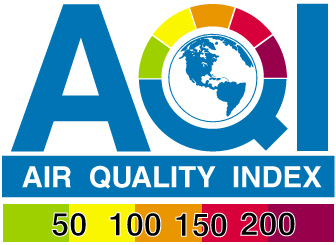
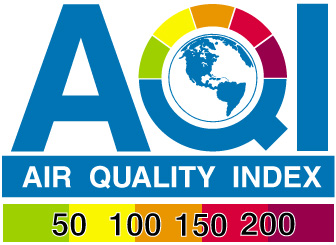
Air Quality Index with colors

Image from EPA Air Now ( https://www.airnow.gov/sites/default/files/download-images/aqi-logos/aqi_ex3.jpg)

The Air Quality Index (AQI) is a color-coded scale that indicates when health impacts may happen based on air quality.  Green or “good” indicates that the air quality poses little or no health risk.  Yellow or “moderate” means air quality is acceptable, but those

who are especially sensitive to air pollution could have health impacts.  Orange or “unhealthy for sensitive groups” air quality will likely impact members of sensitive groups like people with respiratory conditions, older adults, and young children.  Red indicates that the general public may experience health impacts from air quality while sensitive groups may experience more serious issues.  Purple means health impacts have increased for everyone, and maroon reflects a health warning for everyone.  The Air Quality Index applies to air quality for both ozone and particulate matter pollution and is often part of weather forecasting.  You can find the Air Quality Index information on the hccleanair.org website on the home page either on the air quality/ weather banner or Air North Texas’ Arlo’s shell color.   When planning for outdoor activities, you can sign up for air quality forecasts at https://www.airnorthtexas.org.  This ozone season, you can raise your air quality awareness by using the Air Quality Index and knowing your air quality colors.

Clean Air Notes #4 – Lawn Care for Clean Air

Person lawn mowing outdoors illustration, Image by Freepik

Spring is here in Hood County and that means it’s time for our lawns, trees, and flowers to start growing and blooming!  Taking care of our yards provides some opportunities for clean air choices.  If you have gas-powered lawn equipment, be sure to avoid gas spills and maintain your equipment to reduce emissions that contribute to air pollution.  Avoid gas-powered lawn equipment use when the air quality is predicted to be poor.  Plan for these activities on better air quality days.  An even better choice for clean air is to consider electric lawn equipment or manual tools that produce no emissions! 

Plant choices for the yard offer another opportunity for clean air choices.  Consider native trees, shrubs, and plants that require less water, little or no fertilizer, are less susceptible to pests, and more tolerant of local conditions.  You can reduce weeds in flower beds by using mulch.  Mulch is also beneficial in reducing water use.  Reducing water use conserves energy and that helps save money and reduces emissions produced by power plants.  When you are enjoying the spring sunshine in the yard, remember that it provides another opportunity to make clean air choices that help keep our air clean! 

Clean Air Notes #3 Car Maintenance

Car with dog in window
Image by Pexels from Pixabay, https://pixabay.com/photos/dog-pet-car-window-drive-road-trip-1850465/

Ozone season started on March 1st in North Texas and April is National Car Care Month.  In preparation for car care month, here are some ideas to think about to take care of your vehicle and help keep our air clean.  Some car care tips include checking tire inflation, changing air filters, and addressing check engine light issues.  Proper tire pressure improves gas mileage, extends tire life, and can prevent accidents and repairs.  Replacing air filters when needed improves fuel efficiency and vehicle performance.  It can also extend the engine life of the vehicle.  The “check engine” light is a warning indicator for issues related to the vehicle’s engine or emissions system.  It can be related to minor issues or more serious problems.  Delays in addressing the issue can lead to poor performance or costly repairs.  Reducing fuel consumption by addressing these issues reduces the emissions generated by your vehicle and helps improve air quality in our region.  The North Central Texas Council of Governments administers a Car Care Awareness Program.  You can find more information about this program at https://www.ntxcarcare.org

Other vehicle-related clean air efforts include reducing trips by combining errands, observing the speed limit, and avoiding idling.  Additionally, minimizing trips by working remotely, attending meetings virtually when possible, or carpooling can also reduce emissions that contribute to poor air quality.  Keep up those clean air efforts with your vehicle in mind!

Clean Air Notes #2 Start of Ozone Season

Purple flowers

Iris Image by blizniak from Pixabay

Spring is around the corner and with it marks the beginning of ozone season in Hood County and North Texas.  Ozone is the main air pollution concern for Hood County as the county is considered an affected county for ozone meaning that the ozone levels are close to the EPA ozone standard that is considered protective of human health. Ozone is formed when nitrogen oxide tailpipe emissions from vehicles or smokestack emissions from industrial sites mix with volatile organic compounds from things like gasoline vapors and chemical solvents in the sunlight and heat.  Because ozone is formed in sunlight and heat, ozone season includes the summer months as well as early spring and late fall when the weather is warmer.  Ozone season runs from March 1st through November 30th in North Texas. 

There are some simple things that we can all do help reduce the emissions that contribute to ozone formation.  To reduce vehicle tailpipe emissions, you can limit vehicle trips by working remotely or attending meetings virtually when possible, carpooling, refueling late in the day, reducing idling, observing speed limits, and maintaining your vehicle including monitoring tire pressure.  When it’s time to replace a vehicle, consider a clean vehicle option like an electric or hybrid option or a SmartWay vehicle from EPA’s SmartWay list at https://www.epa.gov/greenvehicles/find-smartway-vehicle.  To reduce emissions from power plants, switch to LED lighting at home, make energy efficient home improvements, or simply turn things off when not in use!  Even water conservation helps reduce energy use too!  You can also sign up for ozone alert notifications through the Texas Commission on Environmental Quality (TCEQ) at  https://www.tceq.texas.gov or Air North Texas at https://www.airntorthtexas.org  to let you know when you need to pay extra attention to your clean air efforts. 

Welcome to Clean Air Notes

Metal Welcome sign with two kids on a bicycle outside.

Welcome to the introduction of the new Clean Air Notes from the Hood County Clean Air Coalition!  This blog will highlight activities and actions that help keep our air clean.  For Hood County, the main air pollution concern is ozone which is formed from tailpipe emissions from cars and trucks on the road, smokestack emissions from industrial sites like power plants, and emissions from other equipment like that used for construction in off-road settings.  The Hood County Clean Air Coalition was formed in 2012 when Hood County was under consideration of a “non-attainment” designation for ozone – meaning that ozone levels measured at the local monitor were almost higher than the level that was considered healthy especially for senior citizens, children, and those that suffer from asthma and other lung disorders.  The Coalition is comprised of local governments, schools, businesses, and citizens whose goal is to promote clean air in Hood County.   Current board members of the Coalition are Mark Franco, Chairman, Granbury Mayor Jim Jarratt, Hood County Judge Ron Massingill, Cresson Mayor Pro-Tem Lisa Clement, Joe Drew, Chuck Licata, John Campbell, Brian Caruthers, and Zak Monroe.  The Coalition’s activities are overseen by the Air Quality Program Manager, Michelle McKenzie.  We hope this blog will provide insight into simple choices that can help keep our air quality healthy for the residents in Hood County and keep residents informed about regional activities related to air quality! 

Image by: Brigitte Feauge from Pixabay